Negotiate the Outcome, Not Just the Activity
A lot of BDSM negotiation sounds like ordering from a menu.
Impact play. ✅️
Bondage. ✅️
Wax. ✅️
Humiliation. ✅️
Praise. ✅️
Orgasm control. ✅️
Yes to this. No to that. Maybe to something else.Those conversations are necessary. We absolutely need to talk about activities, physical limits, medical considerations, safewords, aftercare, and risk.
But agreeing on the same activity does not mean two people have agreed on the same experience. Two people can both say yes to impact play and be imagining completely different scenes.
One person may want to be pushed… to grit their teeth, endure, and discover that they are stronger than they thought. Another may want catharsis. They want the noise in their head replaced by something immediate, physical, and impossible to overthink. Someone else may want playful punishment: teasing, laughter, exaggerated complaints, and a smug Dom(me). Another person wants fear, seriousness, and the feeling that they are being handled by someone who has absolutely no intention of being charmed out of what comes next. Same activity. Entirely different destination.
That is why one of the most useful questions in negotiation is not simply: “What do you want to do?”
Its:“How do you want to feel?”
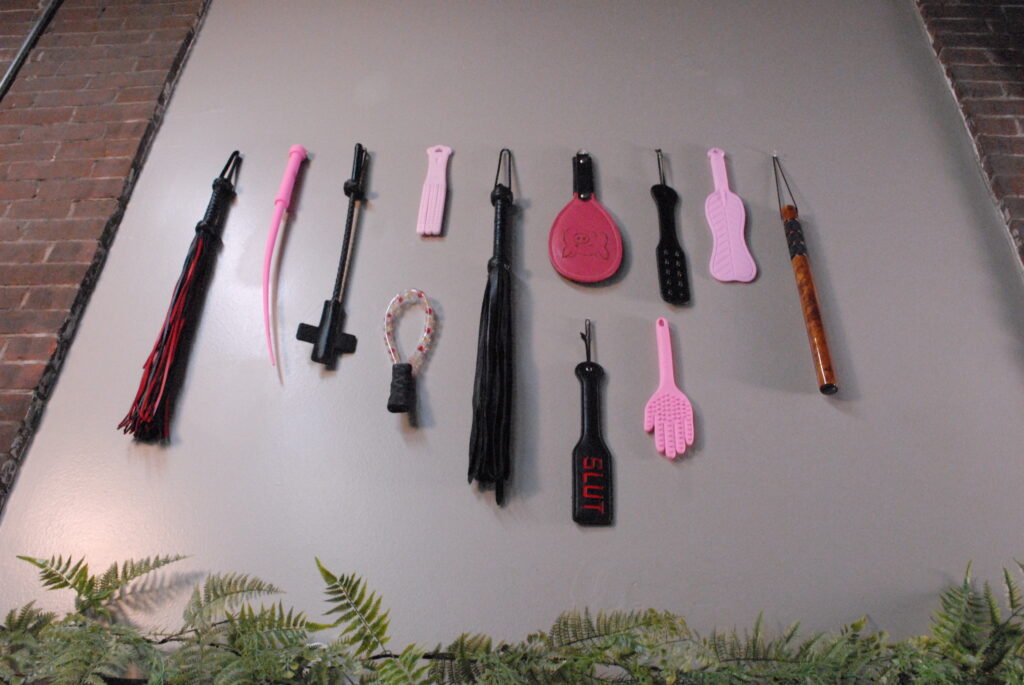
Activities are really just ingredients. Activities aren’t scenes by themselves. A paddle is not a scene. Rope is not a scene. A blindfold is not a scene. Kneeling is not a scene. They’re ingredients. Tools. Methods of creating something. You can hand two people the same collection of tools and get wildly different results because the emotional intention behind them is different.
It’s a little like asking two people to make you dinner and telling both of them to use pasta.One brings you macaroni and cheese in a novelty dinosaur bowl. The other dims the lights, pours wine, serves handmade ravioli, and looks personally offended when you ask for Parmesan in the green-top shaker.
Technically, both served pasta but that doesn’t make them the same meal.
And yet, in kink, we often negotiate as though naming the ingredient tells us everything we need to know about the meal. “I like bondage.” That could mean:
“I enjoy the beauty and structure of rope.”
“I want to struggle and discover that I cannot get free.”
“I want to feel contained because containment helps me relax.”
“I want to be displayed.”
“I want to surrender responsibility for what happens next.”
“I want to feel helpless.”
“I want to feel cared for.”
Those aren’t all interchangeable desires.
I think people often ask with the language they know, that sometimes people ask for an activity because it’s the closest available word for what they actually want. They may say they want punishment when what they want is accountability. They may ask for humiliation when what they really want is permission to stop maintaining a polished, competent version of themselves. They may ask for restraint when they are longing for stillness. They may say they want to be used when they actually want to feel deeply wanted. They may ask for pain because pain is a concrete request, while admitting that they want attention, approval, release, or emotional intensity feels far more vulnerable.
That doesn’t mean the person is being dishonest. Sometimes we just don’t have the language yet. We know the image that excites us. We know the activity we’ve seen in photos, porn, writings, or other people’s scenes. We know that something about it pulls at us and draws us in. But we may not yet know which part of it matters.
Was it the rope? Or was it the expression on the bound person’s face when they realized they could stop holding themselves together?Was it the spanking? Or was it the deliberate pause between each strike? Was it the kneeling? Or was it the moment of being looked down upon and fully noticed?
Good negotiation can help uncover that. Not by interrogating someone until they produce a perfectly articulated psychological thesis about their kink, but by being curious.
“What part of that fantasy appeals to you?”
“What do you imagine feeling in that moment?”
“Do you want this to feel playful, serious, affectionate, humiliating, ceremonial, frightening, nurturing, or something else?”
“What would ruin the mood for you?”
“What would make you feel successful afterward?”
Those answers often tell me much more than a list of toys ever would.
Let us also consider that the same word can mean opposite things.This is especially important with emotionally loaded words.Take humiliation. For one person, humiliation means playful embarrassment. Blushing, teasing, silly positions, or being made to admit something they would rather hide. For another, it means objectification. For another, it means being spoken to harshly. For someone else, harsh language would be genuinely upsetting, but being inspected, displayed, or made to perform would feel wonderfully exposing.
Even praise is not universal.“You’re such a good girl” may make one person melt. Another may find it patronizing. Someone else may like praise only when it feels difficult to earn. Another wants relentless reassurance.
The label is not enough.The negotiated outcome gives the label context.
Negotiating outcomes creates more possibilities. When the activity is treated as the goal, a scene can become rigid. We negotiated wax, so now we must use wax. We planned rope, so the rope must happen. We said impact, so we keep escalating impact even though the energy in the room is clearly asking for something else. But when the outcome is understood, the people involved have more room to adapt.
Suppose the desired outcome is surrender. Maybe rope creates that. Maybe a blindfold, firm positioning, and clear verbal control create it better that day.
Maybe the bottom is too physically restless for decorative bondage but responds beautifully to being told where to place their hands and not to move them.
If the goal is catharsis, the scene might include impact, but catharsis may come from crying, vocalizing, struggling, breath control, emotional permission, or simply being held afterward.
Understanding the intended destination gives us more than one route. That flexibility matters because bodies change. Energy changes. Pain tolerance changes. Emotional capacity changes. Sometimes the scene we imagined during negotiation is not the scene that fits once we are actually together. Intentionality does not mean forcing the original plan. Sometimes intentionality means noticing what is happening and changing direction without losing sight of what the scene was meant to offer.
It is important to note that outcomes are intentions, not guarantees and thats an important distinction here. Negotiating an outcome doesn’t mean *promising* a specific emotional result. No one can guarantee subspace. No one can guarantee catharsis. No one can promise that a scene will heal something, create trust, provide closure, or make another person feel transformed.
Human emotions are not vending machines. We cannot insert twelve paddle strikes, press the “release” button, and expect a tidy emotional product to drop into the tray. We can negotiate the experience we are trying to create. We can discuss the desired tone, intention, boundaries, and emotional direction. We can say:
“I want this to feel challenging but supportive.”
“I want to feel small, not worthless.”
“I want intensity, but I do not want cruelty.”
“I want to be frightened inside a structure where I still feel safe.”
“I want to struggle, but I do not want you to interpret that struggle as permission to ignore my safeword.”
“I want to feel used during the scene and cared for immediately afterward.”
Those are useful agreements. They help both people understand the emotional shape of the scene without treating anyone’s feelings as a contractual obligation. And a technically correct scene can still miss.
Most experienced players have probably encountered some version of this. Every activity was technically negotiated. No explicit limit was crossed. The toys were used correctly. The safeword system was respected. And still, something felt off.
Sometimes that happens because the scene followed the agreed list but missed the desired tone. A person wanted to feel challenged and instead felt managed. They wanted playful degradation and received genuine coldness. They wanted surrender and instead felt ignored. They wanted to be pushed and instead felt as though the Top was merely completing a sequence of activities.
Nothing was necessarily “wrong,” but the scene never became the thing they were hoping to experience. That doesn’t always mean someone failed. Compatibility matters. Chemistry matters. Skill matters. Communication is imperfect. Sometimes people do not discover what they wanted until they experience what they did not want. But negotiating the desired outcome gives us a much better chance of noticing the difference.
So ask about the movie in their head. Its one of my favorite ways to understand a fantasy. Ask someone to describe the scene playing in their head. Not merely the actions. The atmosphere.
What happens before the first touch? Is there conversation, or silence? Are they ordered into position, invited into it, or physically placed there? Do they imagine eye contact? Do they want to be watched closely, or do they want to disappear beneath a blindfold? Is the Dom(me) amused, stern, affectionate, detached, reverent, predatory, proud?Do they want to be corrected? Do they want to impress? Do they want resistance to be part of the experience? What happens when it is over?
Often, the smallest detail is the most revealing. Someone may describe an elaborate bondage fantasy, but the part that makes their voice change is the imagined moment when the Dom(me) checks every knot and quietly says, “You’re not going anywhere.”
The fantasy may be full of impact, but the emotional center is the moment they are praised for taking it.
They may talk about being displayed, but what they want most is to feel beautiful while vulnerable.
The activity gives you the outline. The emotional details give the scene its pulse.
And better negotiation builds better aftercare (because, *yes*, aftercare should always be part of your negotiations!). If someone wants a scene to feel cold, impersonal, or objectifying, that does not necessarily mean they want to be emotionally abandoned afterward.
If they are chasing catharsis, they may need quiet, water, warmth, reassurance, or space to cry without being asked to explain themselves immediately.
If they want to feel proud of their endurance, naming that accomplishment afterward may be central to their aftercare.
If they want playful embarrassment, laughing together may help bring them back.
If they want ritual or service, aftercare may include helping restore the space, preparing a drink, or completing some closing act that makes the scene feel finished.
Aftercare is not a standard-issue blanket and granola bar, which can be wonderful, but effective aftercare often relates directly to the experience that was created. When we know the intended emotional destination, we’re better able to plan the landing.
Negotiation should be so much more than risk management. Consent negotiation is often taught primarily as a way to prevent harm. That is essential. We need to discuss limits, medical risks, triggers, safewords, marks, privacy, sexual contact, fluid exposure, and what happens if something goes wrong. But negotiation can do more than prevent a bad scene. It can help create a good one. It can be collaborative world-building. It can be the moment where two people stop saying, “Here is what I allow,” and begin asking, “What are we trying to make together?”
That doesn’t make negotiation less practical, it just makes the practical information more meaningful. A list of activities tells me what may happen. A discussion of outcomes tells me what those activities are supposed to accomplish.
When someone tells me what they want to do, I’m often listening for the question beneath the request. Why this? Why now? What part matters? What are they hoping to hand over? What are they hoping to receive? What would make this feel meaningful instead of mechanical?
Sometimes the answer is simple.They like the sound of a paddle. They think rope is pretty. They want to try something because it looks fun. Not every kink needs to reveal a hidden emotional wound or become a journey into the deepest chambers of the psyche. Sometimes a person wants to be spanked because being spanked is hot. And that’s a perfectly valid outcome too.
Pleasure is an outcome. Fun is an outcome. Laughter is an outcome. Curiosity is an outcome. The point is not to overanalyze every desire. The point is to avoid assuming that the name of an activity tells us everything.
So what are we actually creating? A memorable scene is rarely memorable simply because of the implements involved. People remember anticipation. They remember the way they were looked at. They remember the sentence that made their stomach drop. They remember realizing they could let go. They remember laughing at exactly the wrong moment and being punished for it. They remember feeling capable. Helpless. Beautiful. Ridiculous. Possessed. Protected. Seen.
The toys may help create those feelings, but the toys are not the feelings themselves.
So yes, negotiate the paddle. Negotiate the rope. Negotiate where wax may land, which words may be used, what marks are acceptable, and when the scene stops.
But also ask:
What are we trying to create?
How do you want this to feel?
What do you hope to carry with you when it is over?
The activity is the route. The outcome is the destination. And the more clearly we understand where we are trying to go, the more intentionally we can choose how to get there.